 Belugas are gregarious and form groups of 10 animals on average, although during the summer, they can gather in the hundreds or even thousands in estuaries and shallow coastal areas. They are slow swimmers, but can dive to 700 m (2,300 ft) below the surface.
 Beluga, a small, toothed whale found mainly in the coastal waters of the Arctic Ocean and adjacent seas but also in rivers and deep offshore waters. It is an extremely vocal cetacean and thus has also been referred to as the ‘canary of the sea.’
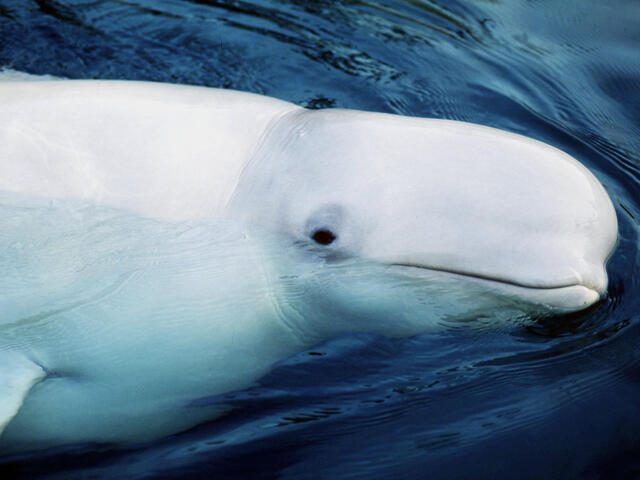 Belugas are extremely sociable mammals that live, hunt and migrate together in pods, ranging from a few individuals to hundreds of whales. Their bulbous forehead, called a "melon”, is flexible and capable of changing shape. This allows them to make different facial expressions.
 Beluga whales (Delphinapterus leucas) live in cold Arctic waters near the coasts of North America, Russia and Greenland. As a mostly migratory species, beluga whales spend the winter around the Arctic ice cap, and the summer in warmer river estuaries to give birth.
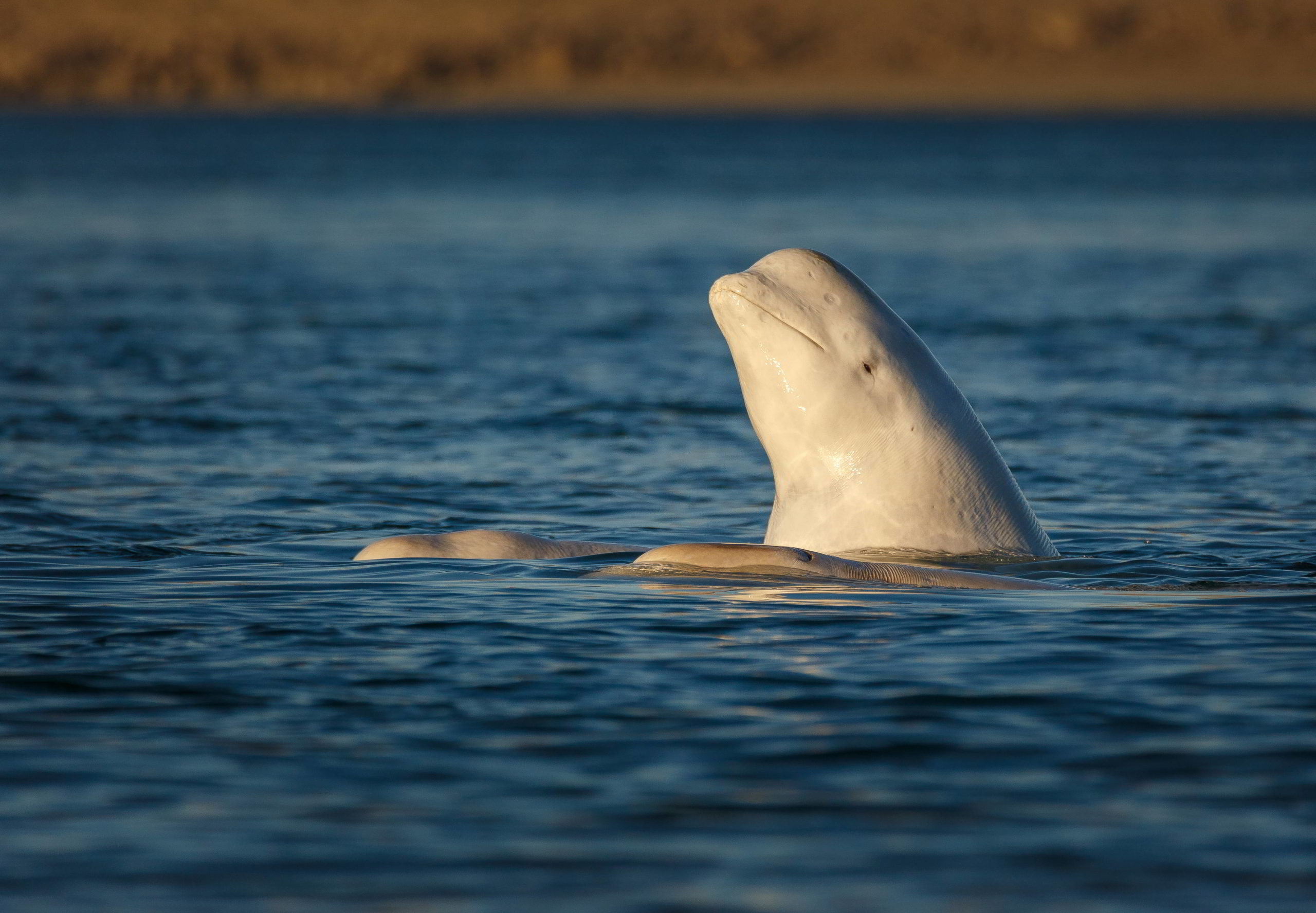 With their “smiling” upturned mouths and pearly white skin, belugas (Delphinapterus leucas) are one of the most popular and recognizable whales. Belugas are extremely sociable mammals that live, hunt and migrate together in pods ranging from a few individuals to hundreds of whales.
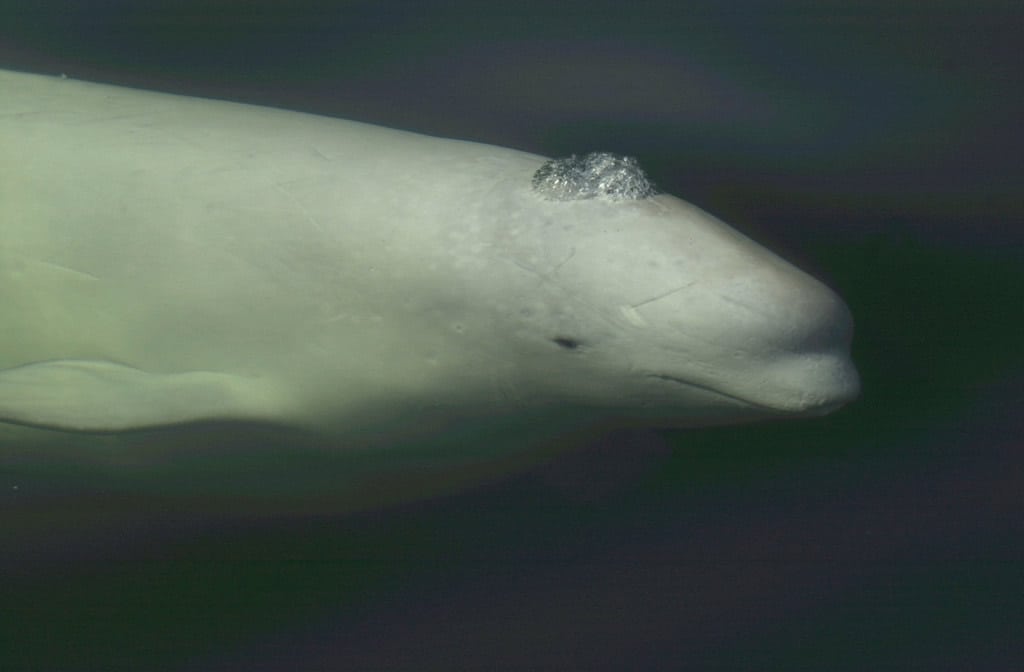 Beautiful and expressive, beluga whales are known as the canaries of the sea. But like the fate of many a songbird, belugas are continually exploited and held captive for human entertainment. The totally enchanting beluga whales are one of the most vocal of all whales and dolphins.
 Belugas migrate south to the subarctic when Arctic waters freeze over, and return north when the ice breaks up in the spring. Known for their distinctive white color, belugas live in the chilly waters of the Arctic and subarctic.
 Belugas are often called the canaries of the sea. They are highly vocal and produce a series of chirps, clicks, whistles and squeals to convey important information to each other. Along with bowhead whales and narwhals, beluga whales are one of the three whales that live only in Arctic waters.
 The beluga, or white whale, is one of the smallest species of whale. Their distinctive color and prominent foreheads make them easily identifiable.